Dwight Makes Right
A work of fiction

[Note to my readers: I don’t normally publish fiction here, but let’s give this a try. This is a short story, just under 4000 words. It takes place just far enough into the future to happen. Let me know what you think.
Thanks! Bucky]
To: Infinity Entertainment Customer Service Dept
To Whom It May Concern:
I am writing requesting human attention—which is, as of January 1st of this year, my right as a citizen of the United States in accordance with the recent ratification of the AI Amendment to the Constitution—to my problem with my lifetime subscription to “endless” episodes of The Office, bought at launch many years ago at a then-hefty price to ensure I would receive new AI-generated episodes until my death.
This served me well for many years, but recently has become problematic, which I have incessantly complained about to your AI customer service reps to no avail. Now, in light of the aforementioned amendment and under terms described in the new user agreement which I read and agreed with the terms just moments ago, I demand satisfaction.
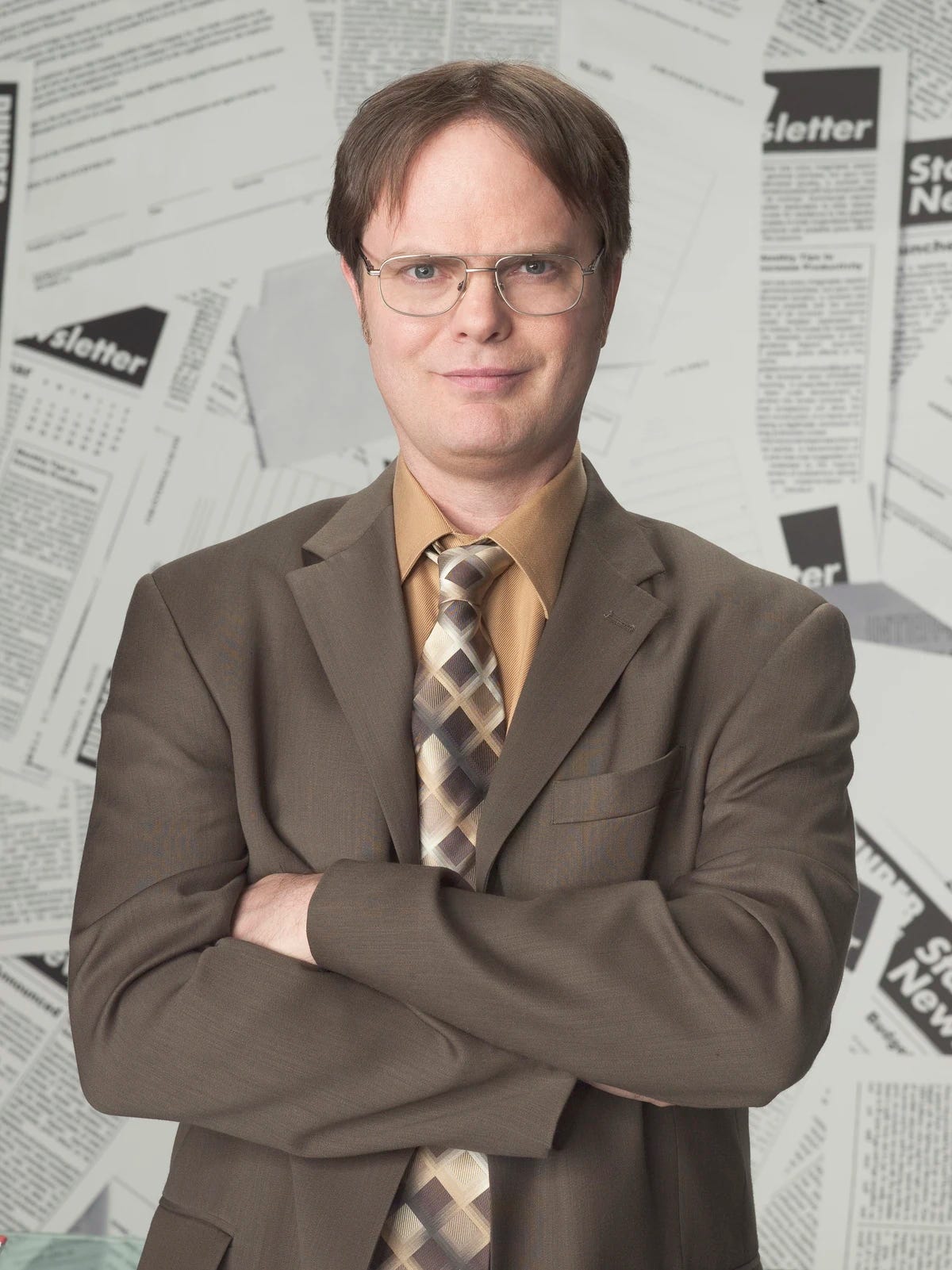
The “new episodes” are nothing more than Dwight living in a condo that exactly resembles my own, sitting on the same couch that I own, and staring back at me. I don’t expect anyone younger than me to understand what a “fish tank” is, but when I was a little kid, people still had them and they were about as interesting as what I’m getting now.
The AI reps suggested:
· Watching old episodes from the archive, which is the antithesis of the point of purchasing the subscription and would only bring up memories of my ex-wife as Pam’s character was recursively reconstructed to resemble her back when things between my ex and I were still good. (Note that I turned off the Recursive Regeneration Feature unfortunately after finding out that Steve Carrell’s image in the original series had been replaced with Richard Grieco, after the Carrell lawsuit was settled.)
· Rebooting the show from finale of Season 9 of the original series. However, according to the Single Timestream Clause of the agreement, this would erase every episode that has been generated for me thus far.
· Returning to an episode I enjoyed and restarting the show from there. I had thought of this on my own, sacrificing a few episodes at a time, but it always ends in the same space, with Dwight just fishtanking me from a replica of my own home.
I am retired. I am on a fixed income. My cost of living still raises each year due to standard inflation. I’ve had to cut back on everything. I can’t afford the monthly vig of the streaming services anymore and what’s left on the public domain channels are too hard to watch since they started blurring out faces of the characters for whom they don’t have the rights. And lord knows I can’t afford a VR tank let alone the cost of the subscriptions to one of those coffins. So basically, I’m entertaining myself until I die watching The Office, just as I was promised when I purchased the aforementioned lifetime subscription.
Please fix this problem. I paid for this. YOU OWE ME.
Best,
Sam Antoon
***
Orian Biloxi read and reread the letter. It was so different from the other nonsense that filled up his inbox. Most of the people were complaining about terms of service they had agreed to, clearly without reading them first. Then there were the people who just could not grasp the meaning of those terms. Then were the mentally ill and the intellectually challenged who were so far off-base that their problem couldn’t be determined, just random ramblings about their episodes controlling the weather and about pyramids and lizard people. And there were a surprising number of people who—through a phenomena called “entertainment pareidolia”—thought that God was speaking to them through their show.
But this problem sounded like a real one. He would have to take this a step further—he would have to take this down to the Test Department. He shuddered just thinking about that dreary floor. No one in management liked going down there or even communicating with any of the VR testers—they were just too creepy.
The Test Department experienced new releases for bugs of all kinds—most importantly, liminal spaces in which a viewer could get lost. There was the famous Die Hard incident in which a viewer, while watching in a VR tank, was in “Be the Camera” mode and fell through a hole and ended up on a floor with no way out. The story wouldn’t progress without the next beat, and he just virtually wandered through an abandoned Nakatomi Plaza office floor for days until his VR tank detected renal failure and shut off the program. His health recovered but he suffered irreparable mental damage, which also meant a massive corporate payout.
But the psychological profile of anyone who would be a good tester were the ones who were at the fringes of society—sociopaths and malcontents who would chronically defy and oppose any boundaries and rules presented to them. They were there to find where the systems broke, where the AI engines could make no sense of their thought pattern and just gave up or created a cage to contain them. Cyber freaks already so broken that a hostile AI couldn’t scare them. Weirdos like this were necessary, but really rough to actually talk to.
***
The air that blew through the door of the Test Department smelled like a hamster cage. There was also a texture to the air Orian didn’t like, but couldn’t place—a thickness, like incense adds, but with none of the pleasurable scent. As the door shut behind him, he felt a little sweaty instantly as he took in the layout.
Orian’s office was set up like a one-bedroom apartment, where he both lived and worked, which gave him the benefits of both working from home and onsite. The upper management had fantastic multiroom offices with their own servants’ quarters. Even the interns, while living in cubicle clusters, had their own bedrooms. But Test had a group kitchen, a common entertainment room, a battery of VR tanks, and racks of bunks like you would find in a barracks or a county jail.
Orian reluctantly approached a pale, gangly man making a pot of coffee. He was naked except for a Mountain Dew-branded Speedo.
“Hi, I’m Orian, I’m from Customer Service. Is there someone here I can speak to?”
“You can speak to me,” he said, matter-of-factly. “Screen name is Dagger.”
“Well…Dagger,” Orian said, trying to look away from the man while talking to him. “I have a problem, and the engineers can’t help with this one.”
“That’s because engineers don’t solve problems, they create them,” he said, condescendingly. “Coffee?”
“Sure, thank you.”
“Most of these chumps just drink energy drinks. It’s rare that I get to share a cup with someone. Have a seat.”
Orian noticed the crumbs on the table and resisted wiping everything up. He linked telepath comms with Dagger and forwarded the email. Dagger stared off into the distance, reading the email in AR.
“Wow! A typed letter, saved as a PDF, and sent as an attachment!” Dagger exclaimed, taking a sip. “This guy must be old…Oh yes, ‘retired,’ he says right here…yeah, this is a problem.”
Dagger stood up, went to the refrigerator, retrieved a NutriPop, and sucked on it in a socially unacceptable way.
“You know the nature of this problem?” Orian asked, trying not to watch the way Dagger ate.
“I have a fairly good idea. It’s not a malfunction so much as it is performing as it is designed. Our ancestors in the company never gamed out the AI this far. Do you want a NutriPop?”
“No. I ate. Can you fix it?”
“Look, this is a real deep issue. It’s not like patching some code or installing an update. I haven’t seen this show but it’s running off our first gen entertainment AI which had a ton of problems on a metaphysical level—like, the deep philosophy of the AIs we used then never got as deep as they do now.”
“But can it be fixed? By you, by someone else, or the team?”
“We’re super busy down here. We have a release of Rocky coming out, in which you can view it as any of the crowd members or background extras, each with their own backstory. We have to experience every one of them to make sure the AI didn’t create a rapist or a child molester. It takes time.”
“I have a bad feeling about this, that this Antoon guy is just ahead of a curve, and we’re going to have a lot of upset old people soon. Hell, we might even be in breach of contract. Who can help me with this?”
“I can. Maybe. Can you get me a pound of coffee?”
“Coffee? Don’t you…”
“Not this shit. Real coffee. From a fucking tree. They don’t get us the good stuff down here. I know upper management is drinking the real shit.”
“Sure,” Orian said, actually unsure. “I can find that for you.”
“Great. In the meantime, get me access to this Sam Antoon’s metadata from the company server. Everything you got. And give me corporate access to his generator feed.”
Orian didn’t want to give Dagger this much access to the system. A guy like him could go rogue and get into all kinds of things he shouldn’t. But the dread swole in his heart. He opened Dagger’s file, cleared him at level one, and hoped he hadn’t made a mistake.
***
At 2:37 AM, Orian received a code-red call, which triggered his bed to administer an adrenalin shot and woke him immediately. He stared at a 3D-animated avatar of Dagger. He tapped his cheekbone to answer the call.
“Do you have company car access?” Dagger blurted.
“Yes,” Orian replied, wide awake but confused.
“Get dressed and meet me in the garage, now,” he said, urgently. “And don’t wear anything that someone might want to steal from you and sell for a fix.”
Call ended.
***
Dagger wore black boots, black pants, and a black jacket that looked like they had all been bought together. He wore mirrored sunglasses, even though it was the middle of the night. His head was freshly shaven. He looked over Orian’s business casual tracksuit.
“Best you could do, huh?” he sneered.
“What’s the problem?” Orian said.
A robo-Escalade slowed to a halt. The doors opened. Dagger and Orian got in.
“Never mind. We have a bigger problem. Have you ever heard of the Tamagotchi Suicides?”
“Yeah, a bunch of AI pets killed themselves en masse in Japan.”
“Exactly. It started with just one, and then, as time went on, the rest of them did it. That first one, the user just kept it active more than any other. There was some logic problem that once they did the same thing every day long enough, they killed themselves out of the monotony driving them mad. There’s a thing called the hundredth monkey effect. When enough individual AIs learn something, they all know it. This guy’s Dwight is about to kill himself, and that’s not the worst of it—eventually, all the other Dwights will too. And maybe all the characters in The Office. This might even spread to our other IP.”
“A mass suicide of The Office characters?” Saying it out loud chilled Orian’s blood.
“That’s certain. It could take down the whole company. A tester who lets this happen? I’d never get real work again.
“Our buddy, Sam Antoon, stopped seeing other people and the AI slowly wrote out all the other characters as well. And he stopped watching anything else or going anywhere. There was a lack of characters which led to a lack of conflict and a lack of situations—in short, he bored the fuck out of the AI, and it ran out of ideas.”
“Can’t we just give it the new stimulus it needs?”
“That,” Dagger said, with an ominous tone, “requires a writer. Which is where we’re going. Lucky for us, I know of one.”
The robo-Escalade pulled up outside the warehouse district and refused to go any closer to their destination.
“Fucking firewall,” Dagger cursed. “Our precious company doesn’t want us to go down to the neighborhood where those people live.”
“Who?”
“The poor, you corporate bootlicker,” Dagger said with a sneer. “They think it’s dangerous.”
“Is it?”
“Absolutely. That’s why I wanted it to drive us closer. I don’t want to walk where we’re going.”
They got out of the car and walked to their destination. Dagger said nothing, just walked with purpose and it was all Orian could do to keep up. For such a skinny guy, Dagger could move quickly as a cat.
Orian tried to act cool, but he was scared. He had heard a lot about the old retail spots downtown that were now squats, the high crime rates, the stories about people ripping out biochips with jagged knives in the alleys, bodies found in the vacant lots stripped bare of all sellable organs and then set ablaze, VR tanks that were full of disease and black-market entertainment. But around him, for every one person he saw that he thought was scary, was another that just looked hungry or cold, and sometimes there was a mother with small kids walking hand in hand, each holding a pink plastic bag of something or other they had just purchased or bartered for…it couldn’t all be illegal mods and drugs, right?
They came upon a warehouse with a crowd out front, not the people who live downtown but the crowd who came down there to be a part of it, to escape from the “nice” parts of the city and live on the edge for a few hours. And now, Orian was one of them, although he felt like he stuck out, and he did.
Most of them like some kind of rough character, like a caricature of the people who lived a block or two away, like a cleaner version of their roughness. Dagger fit right in, with his black military style garb and his stompy boots, and his facial scowl the perfect addition to his ensemble.
Orian did his best to keep up with Dagger, as he cut through the crowd to get to the door.
They made their way through teenagers who grayed their hair and drew wrinkles into their perfect skin, “oldcore,” they called it, some going so far as to get plastic surgery to appear in their later years. They stood on the corners drinking Ensure supplements and complaining about hip replacements.
At the door, they got stopped by a woman who was taller than either of them, and with a beehive hairdo that went well higher.
“Hey, Grandma,” Dagger said. “I’d like to come in with my plus-one here.”
“No chance, you’re not on the list,” she said, checking an AR screen only she could see. “But I looove your friend’s corporate tracksuit! So ironic!”
“I have a deal with The Writer,” he insisted. “It’s important. Tell him ‘Dagger’ is outside.”
She touched her right cheekbone and activated her phone. They waited.
“You have a ‘Mr. Dagger’ outside?” A pause. “Will do!” she said, tapping her cheek again.
“You two can go in, but only to the lobby. The play has already started, and they don’t take late arrivals.”
They waited in the “lobby” which was a simple room with theater-stage curtains and a long table with play programs stacked on it. Orian picked one up—Death of a Salesman. Beyond the room, he could hear voices of actors but not well enough to know what they were saying.
“Is this a horror thing?” Orian asked. “I like horror.”
“I have no idea,” Dagger replied. “I hate this retro shit.”
An old man appeared from behind the curtain. Orian tried not to look shocked. He looked old the way people used to, before hormone treatments and skin replacements—wrinkles everywhere, even at the corners of his eyes. His skin was uneven with horrible little blemishes.
“Dagger! You got that money you owe me?”
“Owe you? I remember it the other way around.”
“Times change,” he said, changing the subject. “Who’s this corpo motherfucker? Are you with Samuel French? You have to tell me if you are!”
“Easy,” Dagger pleaded. “This guy is corpo, sure, but he’s no copyright enforcer.”
“Well, you’re not here to see the play, that’s for damn sure, so what do you want?”
“We want a spec script,” Dagger said.
The Writer’s face went slack and lost all color.
“I’ll need a few things,” he said. He walked out of the theater, and the other two followed.
***
The Writer, in the bedroom of Orian’s office, made a horrible racket banging out the pages of his script on an IBM Selectric he had demanded they bring along. Orian and Dagger drank coffee illicitly procured from the upper management galley while they scanned Antoon’s metadata.
“That typewriter is louder than hell,” Orian said. “Kind of cool to actually see one in real life, though.”
“Can you imagine? There used to be entire office floors of typists…must have sounded like an army of machine gunners.”
“As long as we get what we need. And he also brought a scanner. Have you seen one of those before?”
“Nope. But it will slot right into the database this way. God, this coffee is really hitting. Are you sweating?”
“Yes. And I can’t stop tapping my foot.”
To: Expense Department
RE: “Spec Script” purchase (category: goods, services, data)
To Whom It May Concern:
Spec scripts were proto-AI. Aspiring writers watched all the episodes and used their own imaginations to extrapolate new stories. They used this to get work. Infinity Entertainment used them to teach the AI how to write new episodes. They bought up thousands of spec scripts, cheap, that were sitting useless in the hard drives of aspiring TV writers around the world, and they needed every one they could get.
There were 201 original episodes of The Office. Even the old first gen AIs had no problem generating a great 202nd episode. But after the 402nd episode, the AI would be drawing more influence from the generated material than the original, giving the stories a half-life of sorts; by adding in hundreds of thousands of pages of cost-effective data, they were able to extend the generative pool of input.
Starting with the first viewing, in accordance with the Basic User Agreement (BUA), the following data is collected, colloquially referred to in the marketing department as “metadata”:
· Biochip readings
· User purchase history (UPH)
· Toilet analysis data (TAD)
The purpose of collecting the metadata is, as follows:
· Storyline generation: the user’s emotional response score (ERS) to characters and plots determines the focus of future episodes
· Recursive product placement: products relevant to the specific UPH appear or disappear on a constant basis in accordance with the user’s lifestyle and diet; this is where our profit margin breaks into the black, as the initial setup cost for infinite episode generation is a loss leader. Products that produce a strong enough ERS will automatically be added to the next day’s food delivery.
While this data was enough for the first gen AI powering the infinite episode engine, it has a major flaw—given a long enough timeline, and without enough new stimulating data, the AI will eventually become bored with itself and have a descending incentivized output until it just gives up and, as our primary customer, Sam Antoon, has termed, “fishtanks.”
Mr. Antoon, an early adopter of our product has been bingewatching generated episodes of The Office for over forty years now, at a pace that has exponentially increased since his retirement and has now reached the Maximum Viewing Curve (MVC). The MVC is when new generation is only limited by time itself—Mr. Antoon’s generation platform begins when he wakes and shuts itself off when he falls asleep.
Most users grow bored with a storyline before the AI does. But as Mr. Antoon has demonstrated, it is not only possible, but likely that it will happen with this and other products of ours in the future with increasing frequency; Mr. Antoon is akin to a “patient zero,” the first person to contract a particular disease. This will not only lead to a loss of revenue, but to lawsuits of an unprecedented fiduciary risk.
To correct our current issue, and to correct future issues of the same nature, after being assured by engineering that the AI should not be altered, that I needed to add new data to the pool from which the AI learns. And this required entering a new spec script into the mix for the first time in forty years, which, in turn, required me to find an artisan with writing skills, and commission him to write a spec script.
Furthermore, we will need more human writers to serve as preventive maintenance across all our corporate IP. I suggest setting up an onsite habitat similar to what we have in the Test Department. The writer we used said that he knows more he could bring in.
Please contact me if you need further clarification or justification for this expense. I can only assume that we will need the services of the aforementioned artisan again in the future and would appreciate a prudent and efficient approval.
Thanks for your time,
Orian Biloxi
Customer Service Department
***
Dwight stopped mirroring Sam’s actions and got one step ahead of him.
“I must be cracking up,” Dwight said, staring straight into the camera.
“I must be cracking up,” Sam said immediately after.
Dwight’s daily food delivery came, and he took it to the living room and opened it up.
Sam heard his daily food delivery drop. He got it and returned to the living room to see what Dwight was going to do next.
Dwight unpacked his box, ten seconds ahead of Sam. Most of it was similar to what came every day: six ounces of Honey Nut Cheerios, eight ounces whole milk, one 12-ounce Starbucks pre-made coffee, four slices of bread, two slices of American cheese, a quarter stick of butter, a can of tomato soup, and a can of chili. And one more rectangular box at the bottom he didn’t recognize.
Dwight and Sam pulled out the heavy box and put it on the coffee table. They opened it. Inside, a .45 caliber pistol.
Dwight loaded the pistol’s clip, inserted the clip, and put a bullet in the chamber.
Sam did the same.
Dwight put the gun to his temple.
Sam did the same.
A banging noise came from Dwight’s door. He ignored it, instead crying silently.
A tear rode down Sam’s face.
Suddenly, Jim, Creed, and Darryl burst into Dwight’s living room. Darryl and Creed wrestled the gun away, and Dwight fell into Jim’s arms and bawled.
“It’s okay, Dwight,” Jim said, “My grandfather just died and left me his pizza restaurant! I need you to be the manager!”
Now this, Sam thought, could be really interesting.
He put the gun down and watched the rest of the episode.
Goddam this is dark. I love it!
Brilliant! “They stood on the corners drinking Ensure supplements and complaining about hip replacements.” = *spit take*